
Opinion Piece
By Temwanani Kalulu and Maxwell Madise Wobo
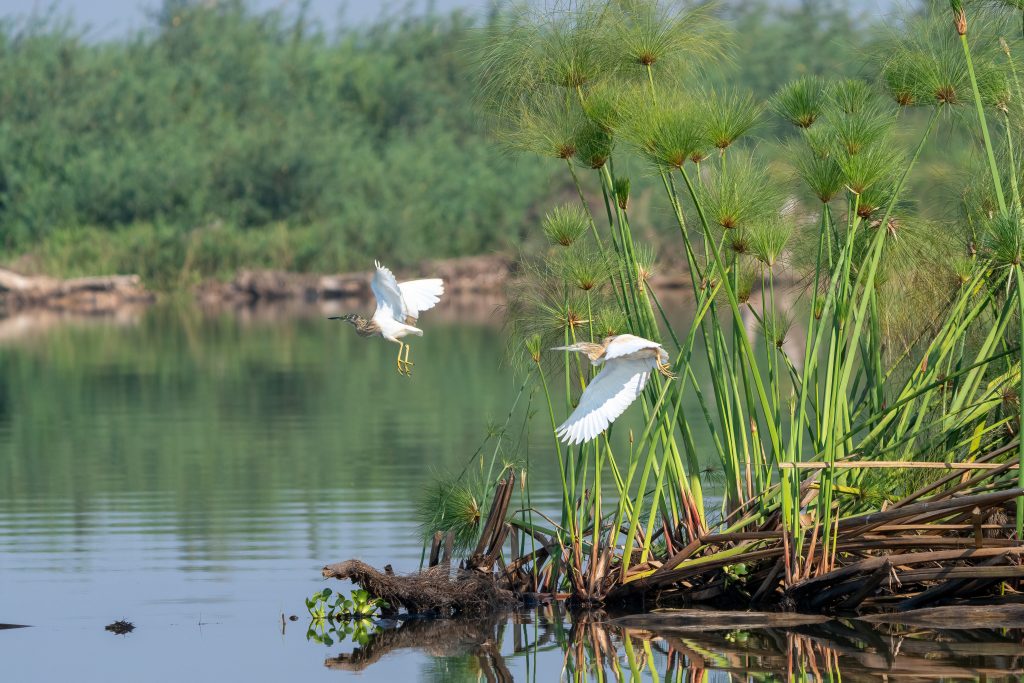
Malawi is one of the most ecologically diverse countries in Africa. Traveling through the regions and districts reveals an enchanting and exotic blend of forests, mountains, rivers,lakes and wetlands including marshes, swamps, dambos, floodplains, and human-made sites such as fish ponds, rice paddies, and reservoirs. Notable wetlands include Lake Chilwa, Elephant Marsh, Vwaza Marsh, Mpatsanjoka Dambo, Shire River,Chia Lagoon, Bua River, Limphasa Swamps, and the Kasungu Plain. Wetlands in Malawi cover about 20% of the country’s land area – roughly 23,697 km², more than 2 million people directly depend on them for food, water, farming, fishing, and other livelihoods.
In Malawi, and indeed world over, wetlands play a crucial role, ensuring food security for thousands, while acting as biodiversity repositories. Further, they support a complex web of life, including migratory birds which use them as feeding and breeding grounds. However, these unique ecosystems are under threat from various factors including climate change pollution, urbanization, among others, threatening these ecosystems.
The case of Malawi’s declining wetlands is one of grave concern. Studies indicate significant and ongoing loss of wetland areas, driven largely by agricultural expansion, settlement growth, and climate variability, with substantial reductions observed in key systems such as the Elephant Marsh.
In February, Malawi joined the global community in celebrating World Wetlands Day, an occasion that often passes quietly but carries profound significance for our nation. This year’s global theme, “Wetlands and Traditional Knowledge: Celebrating Cultural Heritage”, resonated with a country whose rich biodiversity is tied to its history and culture. Further, it highlights the key role that local communities play in the conservation of these unique and fragile ecosystems.
To stem the decline, these communities, in collaboration with environmental organizations and government agencies, are implementing sustainable conservation interventions across the country. An example of this is in Chia Lagoon in Central Malawi, Chia Lagoon is the country’s largest lagoon, spanning 17 km2 within a broader watershed of nearly 989 km2. However, the lagoon has been degraded over the years- driven by agricultural encroachment, deforestation, and poor land-use practices within the catchment, leading to erosion, siltation, and declining water quality. These pressures are compounded by population growth, unsustainable resource use, invasive species, and climate change, all of which have contributed to ecosystem decline.
At Chia lagoon, various interventions have been rolled out, all aimed at protecting the site, conserving species, while empowering local communities including the establishment of community-based sustainable hunting groups, creation of bird sanctuaries, habitat restoration through tree planting, and capacity building in bird monitoring and avitourism.
Led by the Wildlife and Environmental Society of Malawi, the Malawian University restoration of Science and Technology (MUST) and BirdLife international, these efforts have seen the conducting of comprehensive biodiversity assessments, and establishment of restoration of more than 18.3 hectares of degraded land, of 18 Sustainable Bird Hunting Clubs. In addition, local communities are benefitting from improved livelihoods with more than 100 local community members benefiting from alternative livelihoods through loans microfinance support under the project.
In 2025, the designation of Chia Lagoon as a Key Biodiversity Area (KBA) further cemented Malawi’s position as an avi- tourist hub, further highlighting how partnerships and collaboration between local communities and other stakeholders can realize conservation gains. Beyond this impact, there is the need to raise awareness about the importance of these “living landscapes” in addition to ensuring effective policing to protect them. By embracing sustainable stewardship of our wetlands, we can ensure a sustainable future for posterity.