

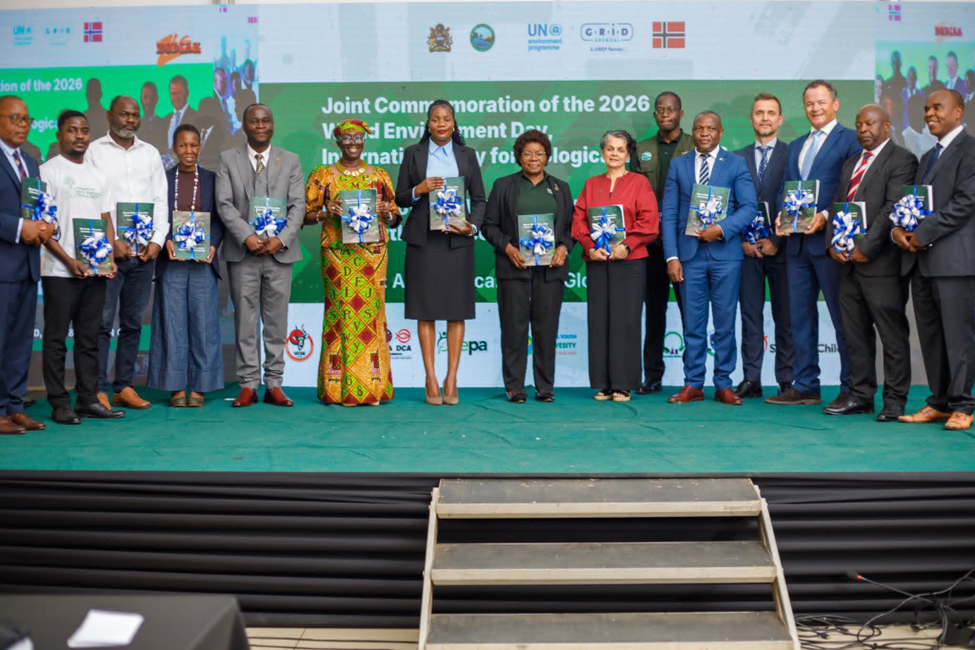
The Wildlife and Environmental Society of Malawi (WESM) played a prominent role in the launch of Malawi’s National State of Environment and Outlook Report (NSEOR 2026), held on 5th June 2026 in Lilongwe. The event formed part of the joint commemoration of World Environment Day and the International Day for Biological Diversity under the theme “Acting Locally for Global Impact.”
Presided over by the Minister of Natural Resources, Honourable Patricia Wiskes, MP, the gathering brought together government leaders, academia, civil society, development partners, the private sector, and youth organisations. Collectively, they reflected on the state of Malawi’s environment and the urgent actions needed to secure its future.
The NSEOR 2026 highlights increasing pressure on Malawi’s forests, land, water resources, and biodiversity despite the country’s rich natural resource base. The report notes that Malawi loses approximately 250,000 hectares of forest annually, while land degradation affects about 60% of the country’s land area. Nearly 90% of households depend on biomass energy, placing additional strain on forests and watersheds. Widespread soil erosion and declining soil fertility continue to threaten agricultural productivity, water quality, and ecosystem health. The trends underscore the urgent need for sustainable natural resource management, environmental stewardship and climate-resilient development to safeguard Malawi’s ecological integrity and support national development goals.
During the event, WESM briefed the Honourable Minister and her delegation on its ongoing conservation and environmental education initiatives. Among these was the Isdell Family Foundation-funded Vulture Conservation Project, implemented through BirdLife International in Liwonde, which raises awareness of vultures’ ecological role as nature’s clean-up crew and their socio-economic value to communities.
Most significantly, WESM showcased the Chia Lagoon Waterbird Resources Management Project, funded through the UKAid Biodiversity Challenge Funds under the Darwin Initiative. Implemented by BirdLife International in partnership with WESM, Malawi University of Science and Technology (MUST) and MicroLoan Foundation, the project is supporting waterbird conservation, promoting avitourism and strengthening sustainable livelihoods. The project has achieved significant conservation and livelihood impacts in communities around Chia Lagoon and has played an instrumental role in the recognition of Chia Lagoon as a Key Biodiversity Area. Additionally, it has mapped and is monitoring 15 bird sanctuaries covering approximately 150 hectares, established 18 sustainable bird hunting clubs and a Bird Hunters Association and is supporting sustainable community livelihoods through micro-lending initiatives benefiting over 100 community members, including 79 women under Microloan Foundation and 20 people under the project’s community revolving fund. The project is also strengthening 30 Village Savings and Loans groups through trainings and provision of materials, rehabilitated five boats, procured 20 life jackets, and planted 17,336 trees across eight villages, contributing to improved biodiversity conservation, community resilience and ecosystem restoration.
According to Temwanani Kalulu, Monitoring, Evaluation, Research and Learning Officer for WESM, this project has become a flagship example of how local conservation efforts can deliver global impact, blending biodiversity protection with community empowerment; ” Chia Lagoon is a powerful example of how local action can deliver global impact. Through strong partnerships and community-led conservation, the project is safeguarding critical waterbird habitats, strengthening sustainable livelihoods, and building resilience for communities that depend on this unique wetland ecosystem.”