
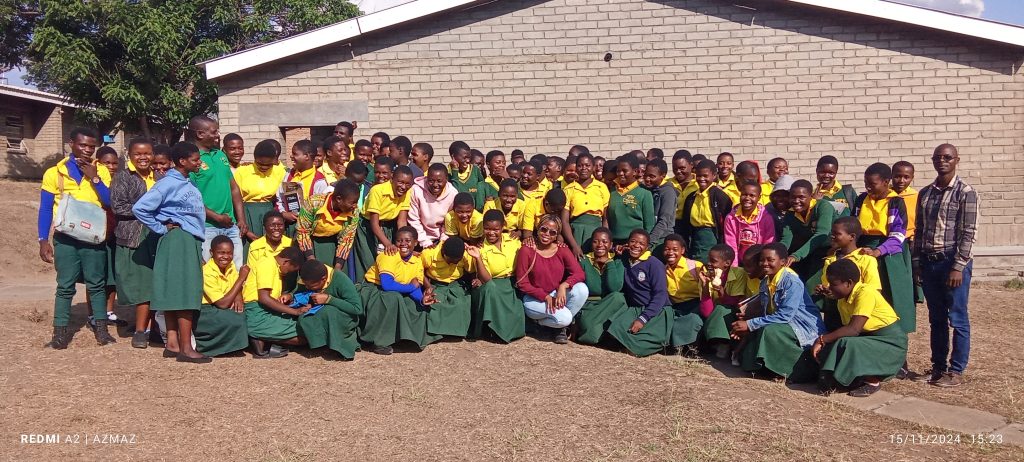
Nestled just a few miles from the UNESCO-listed Mphuzi rock art area which is part of the Chongoni rock art sites, Mphuzi Community Day Secondary School is becoming a hub for environmental and heritage education. Recently, with funding from Heritage Trust, the Wildlife and Environmental Society of Malawi (WESM) in partnership with the Department of National Parks and Wildlife, the school hosted an environmental education session to ignite the passion of young minds in protecting both the natural environment and the invaluable cultural heritage of the Chongoni Rock Art.
A Unique Educational Experience
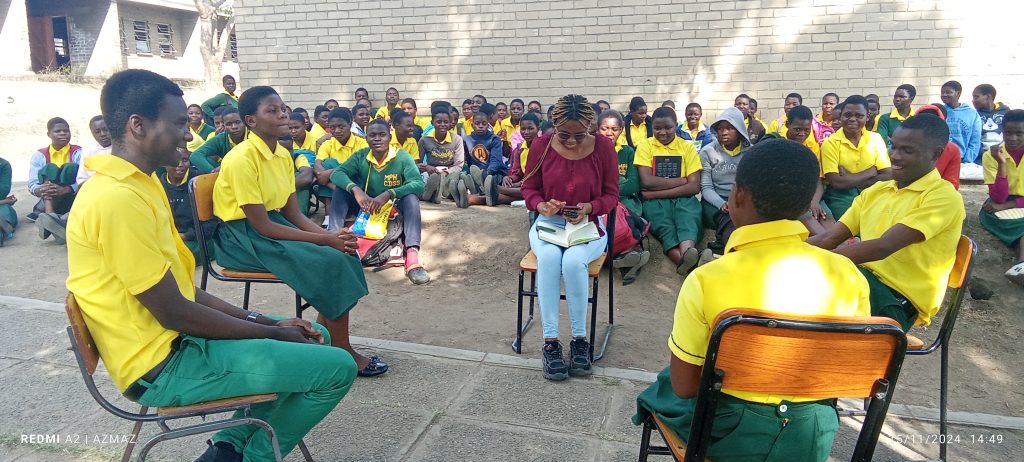
On a bright afternoon, 50 students from the school’s Wildlife Club gathered for a transformative session, led by WESM officers Temwanani Kalulu and Evarson Mkhaya, and Daniel Sibale from the Department of National Parks and Wildlife. As part of a broader effort to involve local communities in the conservation of the Chongoni Rock Art, this session was an eye-opening experience for the students, offering them the tools to become active guardians of both their cultural heritage and the surrounding environment.
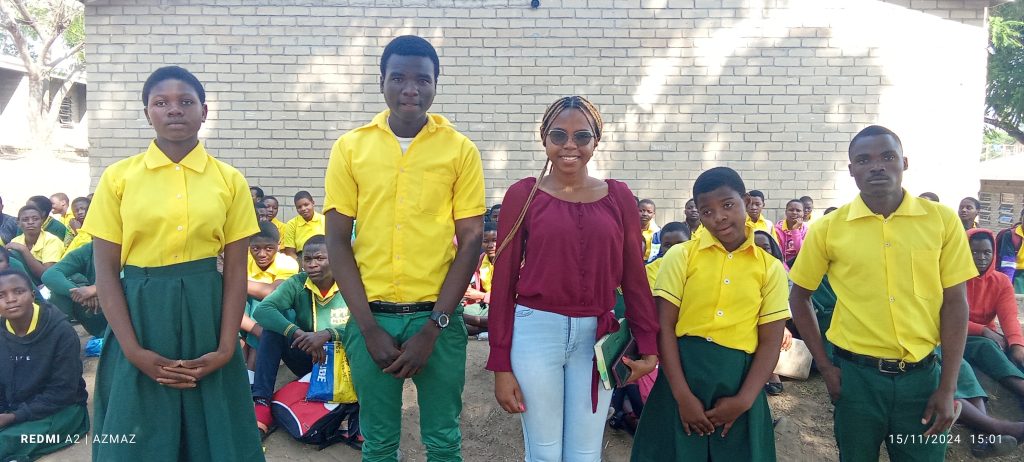
The highlight of the session was a dynamic panel discussion featuring four students: Shallon Richard (13, Form 2), Alice Lazalo (15, Form 3), Wyson Micah (19, Form 3), and Frank Banda (19, Form 4). The discussion focused on understanding the importance of the Chongoni Rock Art, identifying environmental threats to the site, and exploring how the students could contribute to its preservation.
Key Discussion Points
The panel discussion, guided by WESM’s Temwanani Kalulu, covered several pressing topics, offering valuable insights into the students’ perspectives on heritage preservation.
- Awareness and Understanding of Chongoni Rock Art
The students expressed their deep appreciation for the Chongoni Rock Art, a stunning collection of prehistoric paintings that have stood for over 1,500 years. The site represents a critical connection to Malawi’s cultural identity and is an irreplaceable piece of global heritage.
Shallon Richard (13, Form 2) said, “The Chongoni Rock Art is important because it connects us to our ancestors. It shows how they lived and their bond with nature. We must protect it, not only for us but for future generations.”
Alice Lazalo (15, Form 3) reflected, “Before today, I didn’t realize how much the rock art represents who we are. It’s not just drawings, but a piece of our history. Now I feel a responsibility to preserve it.” - Environmental and Human Threats to the Rock Art Sites
The discussion also addressed the environmental and human threats that jeopardize the site, such as climate change, deforestation, and encroachment from unsustainable farming practices. The students recognized the urgency of acting to safeguard the rock art.
Wyson Micah (19, Form 3) remarked, “Human activities like deforestation and farming near the rock art sites harm the environment. If we don’t take action, this treasure could disappear.”
Frank Banda (19, Form 4) added, “Climate change is a growing threat to the rock art. As temperatures rise and rainfall patterns change, the paintings could fade or be damaged. We must act now to protect it.” - Preservation of the Rock Art Sites
The students emphasized that protecting the environment surrounding the Chongoni Rock Art site is key to preserving it. Community-driven conservation initiatives, including active youth involvement, were seen as vital to safeguarding both the site and the broader natural environment.
Alice Lazalo stressed, “It’s crucial to stop people from damaging the environment around the site. We should plant more trees and educate others on the importance of preserving our heritage.” - Personal Action and Responsibility
The students were encouraged to take personal responsibility for their actions and become environmental stewards. Many expressed their eagerness to implement small yet impactful changes in their communities.
Shallon Richard promised, “I will start by ensuring that I don’t litter in my community. I’ll encourage others to do the same. If we all contribute, we can make a real difference.”
Wyson Micah committed to organizing community clean-ups and educational campaigns, saying, “It’s not enough to wait for someone else to take charge. We must lead the way in preserving the environment.” - Raising Awareness in the Community
The students recognized that conserving the Chongoni Rock Art would require broader community engagement. They discussed strategies for raising awareness and involving local residents in conservation efforts.
Frank Banda concluded, “We must involve the local community by organizing awareness programs. If people understand the importance of the rock art, they will be more likely to protect it.”
Goals of the Session
The session aimed to gauge students’ awareness and attitudes toward both environmental conservation and heritage preservation. By engaging directly with the students, the session fostered a sense of ownership and responsibility. The conversation helped identify new strategies to involve youth in protecting Malawi’s heritage sites and environment for the long term.
Inspiring the Next Generation
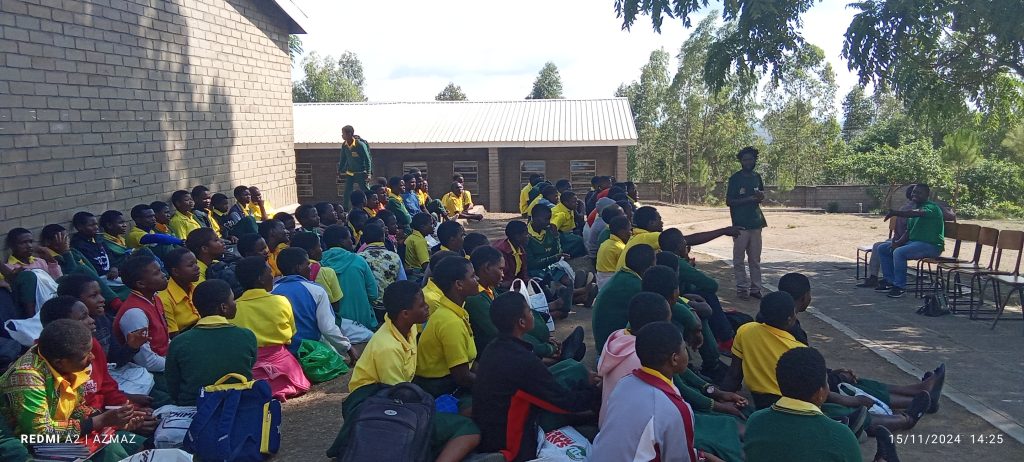
The session at Mphuzi Community Day Secondary School was more than just an educational event—it was a call to action. The students left with a renewed sense of purpose, motivated to protect both their cultural heritage and the environment surrounding the Chongoni Rock Art.
Temwanani Kalulu, WESM Officer, underscored the importance of involving young people in these efforts, saying, “The younger generation holds the key to the future of our heritage sites. By empowering them with knowledge and responsibility, we ensure that they become active participants in preserving cultural treasures like the Chongoni Rock Art.“
Through this collaboration, WESM, the Department of National Parks and Wildlife, and Mphuzi Secondary School are creating a more sustainable future, where youth are not only aware of environmental challenges but are also proactive in addressing them.
Mr. Clement Ganizani, the school’s Wildlife Club patron, expressed his gratitude towards WESM for their impactful initiative. “I want to thank WESM for bringing this important initiative to our school. The students are truly inspired and empowered to take action, raise awareness, and protect the Chongoni Rock Art site. It’s clear that they are motivated to make a real difference in their communities and beyond.”
As the students return to their classrooms and communities, they carry with them a renewed sense of purpose and a commitment to preserving Malawi’s cultural and environmental legacy for generations to come.