

In the heart of Malawi’s Dedza District, a legacy thousands of years old is at risk. The Chongoni Rock Art, a collection of ancient paintings etched into the rocks of the Chongoni Hills, is not only a remarkable cultural treasure but also a testament to the ingenuity of early African societies. However, preserving this UNESCO World Heritage site has proven to be a challenging task, with human activity threatening to erase these invaluable pieces of history.
Group Village Headman Chakachadza, who oversees over 20 villages within the jurisdiction of Senior Chief T/A Inkosi Kachere in Dedza, is a passionate advocate for the protection and preservation of the Chongoni Rock Art. On a Friday afternoon in November 2024, the Group Village Headman shared his insights with Wildlife and Environmental Society of Malawi (WESM) staff Temwanani Kalulu about the ongoing efforts to conserve these invaluable cultural assets. The occasion was a visit to the Mphuzi Rock Art site, one of the many within the Chongoni complex, where he reflected on both the challenges and successes in conserving the sites for future generations.
A Brief History of Chongoni Rock Art
The Chongoni Rock Art sites hold a unique place in Malawi’s cultural and historical fabric. The paintings, believed to be over 2,000 years old, offer a window into the lives of the early human inhabitants of the region. These artworks, which adorn the surfaces of rocks in the Chongoni Hills, depict a wide range of themes, from wildlife to spiritual symbols, reflecting the deep connection between the region’s earliest people and the land they inhabited.
The rock art is thought to have been created by a series of different communities over millennia, including hunter-gatherers and the later farming societies. This diversity of cultural expression makes Chongoni Rock Art a rich tapestry of historical narratives that tell the story of the region’s evolving traditions and belief systems. With 127 different sites scattered across the landscape, the art provides crucial insight into the culture and way of life of the people who created it.
The Significance of Chongoni Rock Art
Chongoni Rock Art is not only of national importance but also holds global significance, which is why it was inscribed on the UNESCO World Heritage list. The sites are a testament to the ingenuity of early societies and offer an extraordinary view of ancient African life, long before written history took hold. For the communities living near these rock art sites, the heritage is also a living part of their identity.
But beyond its cultural importance, the rock art holds great potential for economic benefits. As a UNESCO World Heritage site, Chongoni has the capacity to draw tourists from around the world, bringing with it opportunities for job creation, sustainable tourism, and foreign exchange earnings. The preservation of these sites thus benefits not only history enthusiasts and researchers but also the local communities that rely on the land for their livelihoods.
A Champion for Preservation: Group Village Headman Chakachadza

For Group Village Headman Chakachadza, the rock art is more than a relic of the past—it is part of his childhood. Growing up in the shadow of these ancient paintings, he was enchanted by their mystique. “As a child, I would often wander the hills, fascinated by the images on the rocks. Now, as a leader, I have a duty to protect them—not just for my people, but for the world,” he shares, his voice full of pride and resolve.
His commitment to the protection of the rock art is rooted in a deep sense of pride in his heritage and a determination to ensure that future generations inherit these cultural treasures. In his leadership role, Headman Chakachadza has worked tirelessly with government authorities and other key stakeholders to set up by-laws that prohibit vandalism and ensure that the community takes an active role in safeguarding the sites. He has seen firsthand the damage done by individuals who have defaced the rock art with graffiti or lit fires that leave soot stains on the paintings. These acts of vandalism, he explains, were not only disrespectful to the heritage of the area but also undermined the potential economic benefits that the sites could bring to the region.
The Arrival of the Heritage Trust Funded – WESM Project
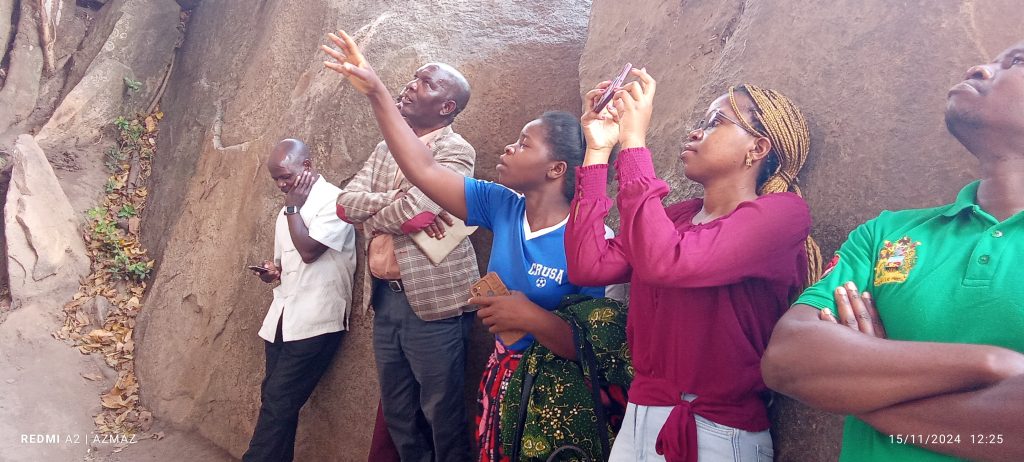
The arrival of the WESM-led Chongoni project, funded by the Heritage Trust, has been a turning point in the conservation of the rock art. The project’s focus on both environmental conservation and cultural heritage preservation has helped change attitudes within the local community. Headman Chakachadza expressed his delight at the impact the project has already had in reducing vandalism and raising awareness about the importance of these rock art sites.
WESM’s approach has been multi-faceted, focusing on raising awareness through education, implementing conservation measures, and encouraging sustainable tourism. Their efforts have made a tangible difference, with Headman Chakachadza noting that, since the project began, there has been a noticeable reduction in the destruction of the sites.
The project has also involved the local community in the conservation process, fostering a sense of pride and ownership among residents. “The community now sees the value in protecting the rock art, not just as a cultural treasure, but as something that can bring us jobs and new opportunities,” Headman Chakachadza remarked.
Looking Ahead: A Sustainable Future for Chongoni Rock Art
Looking ahead, the future of Chongoni Rock Art sites seems brighter than ever. With strong leadership from local figures like Group Village Headman Chakachadza, combined with the continued support of conservation organizations like WESM, the sites stand a good chance of being preserved for generations to come.
As Headman Chakachadza aptly pointed out, the importance of the Chongoni Rock Art goes beyond its cultural and historical significance—it also holds the key to sustainable economic development through tourism. The potential for job creation, local enterprise, and foreign exchange makes protecting these sites not just a cultural responsibility, but an economic necessity. With continued community engagement and the backing of organizations like WESM, these sites have the potential to become a cornerstone of Malawi’s heritage tourism industry.